
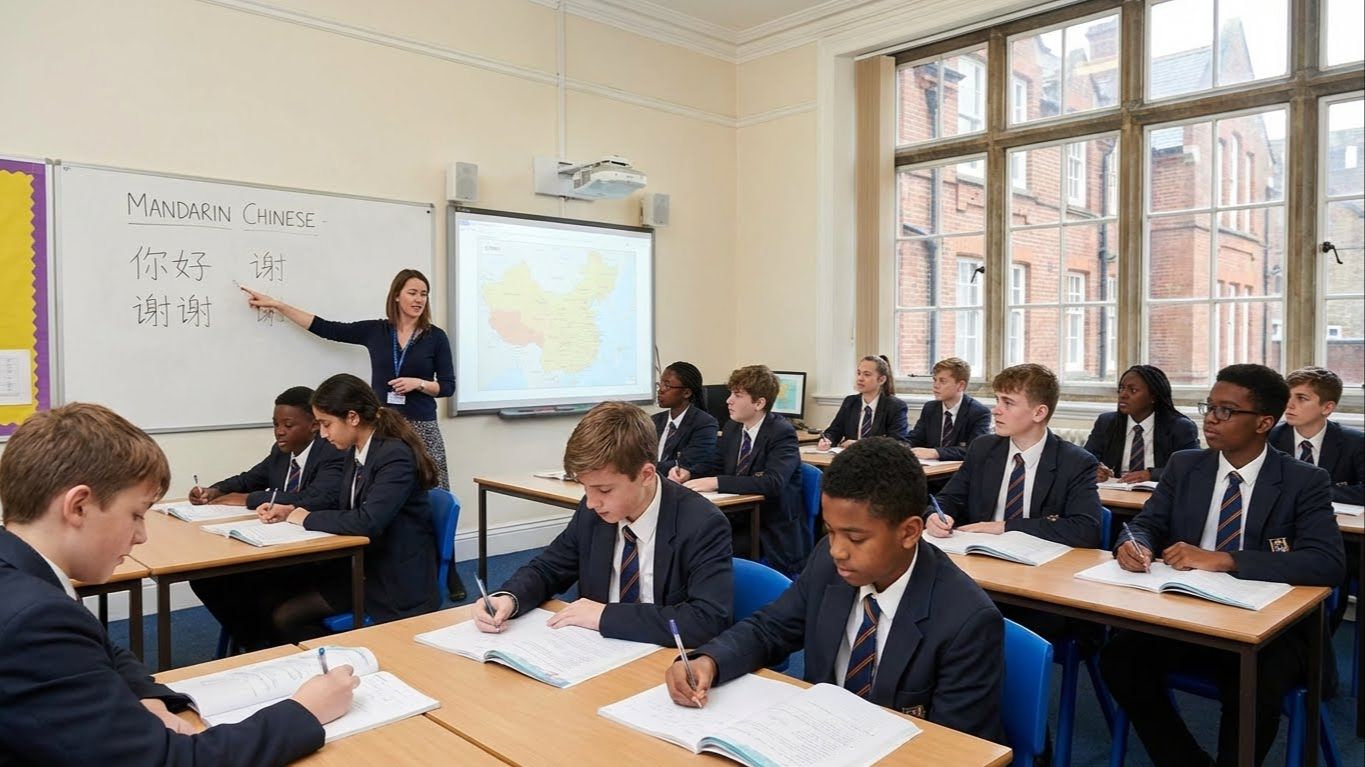
The Language Divide: How Social Inequality Affects Foreign Language Learning in UK Schools
Dec 12, 2025Foreign language education in the United Kingdom has become a mirror reflecting deeper social divisions. While some children benefit from rich language learning opportunities, others miss out entirely. This gap is widening, creating a two-tier system that limits opportunities for young people from less privileged backgrounds.
The Numbers Tell a Stark Story
Recent research reveals a troubling pattern. In the most affluent state schools, 69% of Year 11 students take a language GCSE. In the least affluent schools, that figure drops to just 46-47%. This 22-percentage-point gap represents thousands of children losing access to skills that could transform their futures.
The divide becomes even more pronounced when comparing state and independent schools. Three in ten pupils at independent schools study a language for GCSE, compared to just one in ten at state schools. This means children at private schools are three times more likely to gain language qualifications than their state school peers.
Why This Matters
Language skills open doors. They boost career prospects, enable cultural understanding, and provide cognitive benefits. Yet children from disadvantaged backgrounds are systematically excluded from these opportunities.
The British Council found that only 6% of students across the UK believe they will use another language in their future career. This low expectation hits hardest in communities where language learning is already limited. Young people cannot aspire to opportunities they have never seen.
Vicky Gough, Schools Adviser at the British Council, explains the broader impact of these statistics. Students from less privileged areas face restricted access to language learning. This creates lasting disadvantage in education and employment. The pattern reinforces existing inequalities rather than breaking them down.
The Teacher Crisis Hits Hardest Where Help Is Needed Most
Disadvantaged schools face the greatest challenges in recruiting qualified language teachers. About 34% of Modern Foreign Language teacher trainees are international applicants, but they face significant barriers. Schools must cover the cost of skilled worker visas, which many cannot afford. This means the schools that need language teachers most struggle to employ them.
Independent schools face far fewer staffing problems. They can offer better salaries, smaller class sizes, and more resources. This creates a cycle where privileged schools attract the best teachers, while disadvantaged schools make do with less.
The Opportunity Cost
Children in less affluent schools lose more than just language lessons. They miss international trips, exchange programmes, and exposure to other cultures. Around 74% of secondary schools now offer international visits, but independent schools provide multiple trips and longer exchanges. State schools report that rising costs and parental affordability create barriers.
This lack of international engagement matters. Children who never travel abroad or meet peers from other countries develop narrower worldviews. They lose the chance to see themselves as global citizens.
The Multilingual Paradox
Ironically, the most deprived state schools have the highest proportion of students who speak additional languages at home. These children bring valuable linguistic skills to school. Yet the education system often fails to recognise or build on these assets.
Rather than celebrating multilingualism, schools sometimes view it as a problem. Some children are even removed from language lessons to receive extra English support. This approach wastes natural language ability and sends a damaging message about the value of diverse backgrounds.
Around 30.7% of nursery pupils in England speak English as an Additional Language, rising to 22.8% in primary schools. These children often arrive at school with advanced language learning skills in their home languages. Proper support could help them become fluent in three or more languages. Instead, many leave school with qualifications in none.
Early Years and the Foundation for Inequality
The language divide begins long before secondary school. While language learning in early years settings is growing, access remains uneven. Independent nurseries and those in affluent areas are more likely to offer foreign language programmes. Children from disadvantaged backgrounds start behind and the gap only widens.
Disadvantaged children already enter school with vocabulary levels up to 19 months behind their better-off peers. This "word gap" in English makes adding a foreign language even more challenging. Without targeted support, these children face compounding disadvantages throughout their education.
Government Targets and Reality
The Government's English Baccalaureate aims for 90% of pupils to study a language GCSE by 2025. Current figures show only 53% do so. To meet this target, a quarter of a million more pupils would need to take languages. Given the growing inequality, this goal seems increasingly unrealistic.
The gap between aspiration and reality hits disadvantaged children hardest. Schools serving less affluent communities face pressure to meet academic targets in English and mathematics. Language teaching, already under-resourced, often gets pushed aside. Children from these backgrounds lose out twice, missing both the lessons and the wider opportunities languages provide.
Breaking the Cycle
Addressing language learning inequality requires systemic change. The National Consortium for Languages Education is working to close the gap through school-led research networks and new curriculum approaches. These initiatives show promise but need wider support.
Some practical steps could help:
Schools need adequate funding to employ qualified language teachers. The visa cost barrier for international teachers must be removed or subsidised for disadvantaged schools. Early identification of language talent in multilingual children could unlock potential. Home languages should be valued and supported, not just tolerated.
Community-based language learning could extend opportunities beyond school hours. Partnerships between independent and state schools might share resources and expertise. Above all, the education system needs to recognise that language learning is not a luxury for the privileged few but a right for all children.
The International Dimension
Other countries manage to teach languages more equitably. In many European nations, all children learn at least two foreign languages regardless of background. The UK's poor performance in this area is a policy choice, not an inevitability.
International comparisons show that where governments prioritise language learning with proper funding and teacher training, results improve across all social groups. The UK could learn from these examples if there was political will to do so.
Looking Forward
The language learning divide reflects and reinforces broader social inequalities in British education. Until this changes, thousands of children will leave school without the skills they need for an interconnected world. They will face limited career options and narrower horizons, not because of their abilities but because of their postcodes.
Breaking this pattern requires more than good intentions. It needs sustained investment, clear policy, and a commitment to equity. Every child, regardless of background, deserves the chance to learn languages and engage with the wider world. Currently, the UK education system is failing to deliver this fundamental opportunity.
Key Takeaway
The statistics paint a clear picture: language learning in the UK has become a marker of privilege rather than a universal entitlement. In affluent state schools, 69% of students study a language at GCSE level, compared to just 46-47% in disadvantaged schools. Independent school students are three times more likely to take language GCSEs than their state school counterparts. This inequality begins in early years, continues through secondary school, and extends to university access, where only 6% of students believe they will use another language in their careers. The gap is not just about missing lessons but lost opportunities for employment, cultural understanding, and social mobility. While government targets aim for 90% language GCSE uptake, only 53% currently study languages, with the shortfall concentrated in disadvantaged schools. Closing this divide requires systemic change: removing visa barriers for international language teachers, valuing multilingualism in all its forms, ensuring adequate funding for under-resourced schools, and recognising that language learning is a right, not a luxury. Until these changes happen, the UK will continue to waste the linguistic potential of thousands of children and reinforce the very inequalities education should help overcome.
Stay connected with news and updates!
Join our mailing list to receive the latest news and updates from our team.
Don't worry, your information will not be shared.
We hate SPAM. We will never sell your information, for any reason.
