
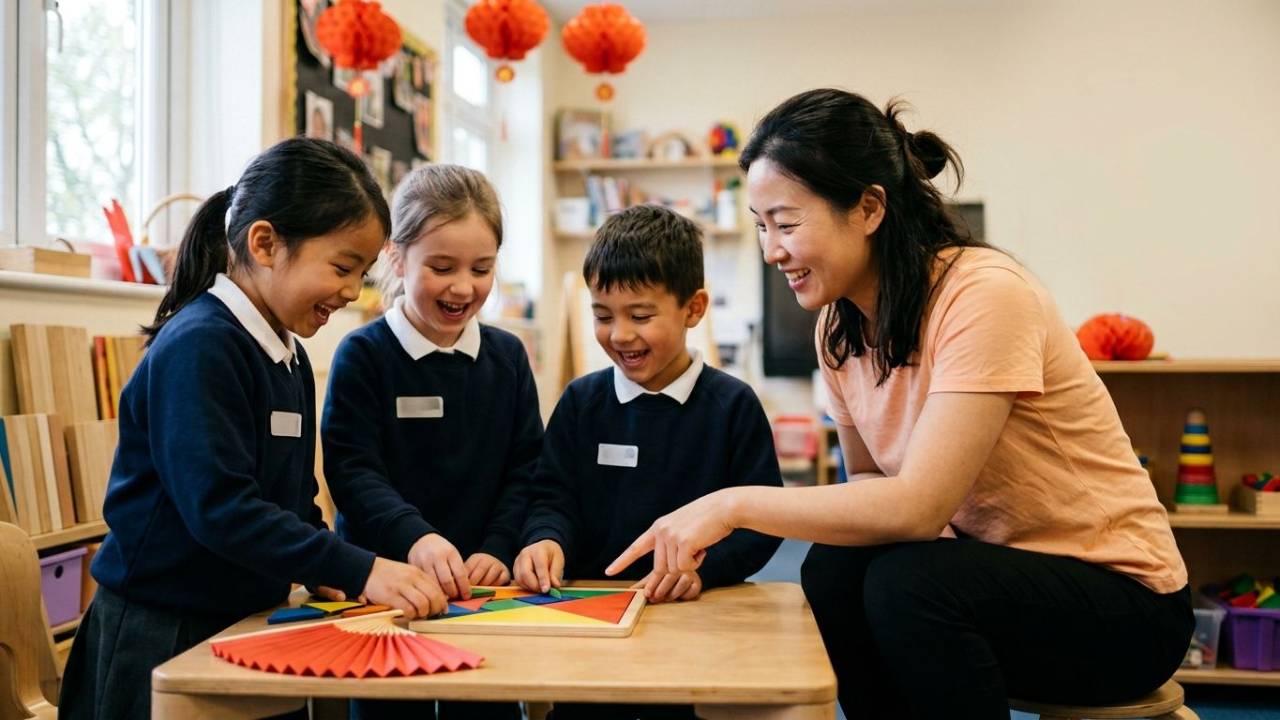
Fewer Than 2% of Primary Schools Teach Mandarin. Here's Why That's a Big Opportunity
Sep 26, 2026Here's a fun fact to bring to your next staff meeting: Mandarin is taught in fewer than 2 in every 100 primary schools in England.
That comes from the British Council's latest Language Trends England report, which surveys schools across the country every year. And while it might sound like bad news for Mandarin, we actually think it's one of the most exciting gaps in primary education right now. Here's why.
What the numbers actually say
The 2025 report paints a pretty clear picture of the primary languages landscape:
- French is still the big one. Around 70% of responding primary schools teach French at Key Stage 2.
- Spanish is second, taught in just over a quarter of schools.
- Mandarin sits at around 1.2% to 1.8% of responding primary schools, alongside a small handful of schools teaching languages like Japanese, Arabic and Latin.
Things look a little different further up the system. At secondary level, 7% of responding state schools offer Mandarin as a full curriculum subject at Key Stage 3, with another 5.8% offering it as enrichment. The Department for Education's Mandarin Excellence Programme, now in its ninth year, is expected to have around 13,000 pupils on track towards fluency.
So children who meet Mandarin early have a real head start if they go on to study it later.
So why is it so rare in primary?
In our experience, it usually comes down to three things.
1. Finding the right teachers. Language teaching is under pressure across the board. The same report found that 68% of the least affluent schools struggle to recruit language teachers. For Mandarin, you need someone who's both a confident speaker and great with young children, which is a very specific combination.
2. Timetable squeeze. Almost one in five primary schools (18.9%) told the British Council that time for languages is being affected by the focus on literacy and numeracy. When every minute counts, adding something new feels like a big ask.
3. The "isn't it really hard?" myth. Mandarin has a reputation for being tricky, mostly because of tones and characters. But that reputation is based on how adults learn it, not children.
Why younger children are brilliant at Mandarin
Mandarin is a tonal language, which means the pitch of your voice changes the meaning of a word. There are four main tones (plus a neutral one). For many adults, that's the bit that feels impossible.
Young children, though, are natural mimics. They copy sounds, rhythms and melodies without overthinking it, which is exactly what learning tones requires. That's why songs, chants and games work so well in early Mandarin lessons: the tones get absorbed as part of the fun rather than drilled as a rule.
Characters are also less scary than they look. Many early characters started life as simple pictures, so words like 人 (person), 山 (mountain) and 火 (fire) can be taught almost like drawing. Children often love spotting the "picture" hiding inside a character.
What Mandarin brings to your school
Beyond the language itself, schools often find Mandarin gives them:
- A genuine point of difference. When 98% of primary schools don't offer it, your setting stands out to parents straight away.
- Rich cultural learning. Festivals like Lunar New Year and the Mid-Autumn Festival bring stories, food, crafts and music into the classroom and link neatly to RE, art and geography.
- A confidence boost. Children who can say a few phrases in a language most adults find daunting feel pretty proud of themselves, and that pride is lovely to see.
- Something for multilingual families. Children from Chinese-speaking homes often get a chance to shine and share their language with classmates.
How to bring Mandarin in without a big overhaul
You don't need to rewrite your curriculum to get started. A few options that work well:
- An after-school club. A low-pressure way to test interest and build excitement before committing timetable time.
- A weekly curriculum session. Mandarin can count as your Key Stage 2 language, or run alongside French or Spanish as an enrichment offer.
- Early years taster sessions. Short, playful sessions of songs, counting and movement are perfect for nursery and Reception.
- Cultural days. A Lunar New Year celebration is a brilliant way to introduce the language to the whole school at once.
Whatever you choose, the most important ingredient is a teacher who speaks Mandarin naturally and knows how to keep young learners engaged. That's what makes the tones stick.
The bottom line
Mandarin is still rare in primary schools, but not because children can't do it. It's mostly down to staffing and timetables. For schools that find a way to offer it, that rarity becomes a real strength.
If you're curious about what Mandarin could look like in your school or nursery, the team at MANDO SCHOOL would love to chat. We've been placing native-speaking Mandarin teachers in nurseries and primary schools across London and Manchester since 2015, running both curriculum sessions and after-school clubs. Drop us a line via mandoschool.com.
SOURCES
- British Council, Language Trends England 2025 (report page): https://www.britishcouncil.org/research-insight/language-trends-england-2025
- British Council, Language Trends England 2025 (full PDF): https://www.britishcouncil.org/sites/default/files/language_trends_england_2025.pdf
Stay connected with news and updates!
Join our mailing list to receive the latest news and updates from our team.
Don't worry, your information will not be shared.
We hate SPAM. We will never sell your information, for any reason.
