
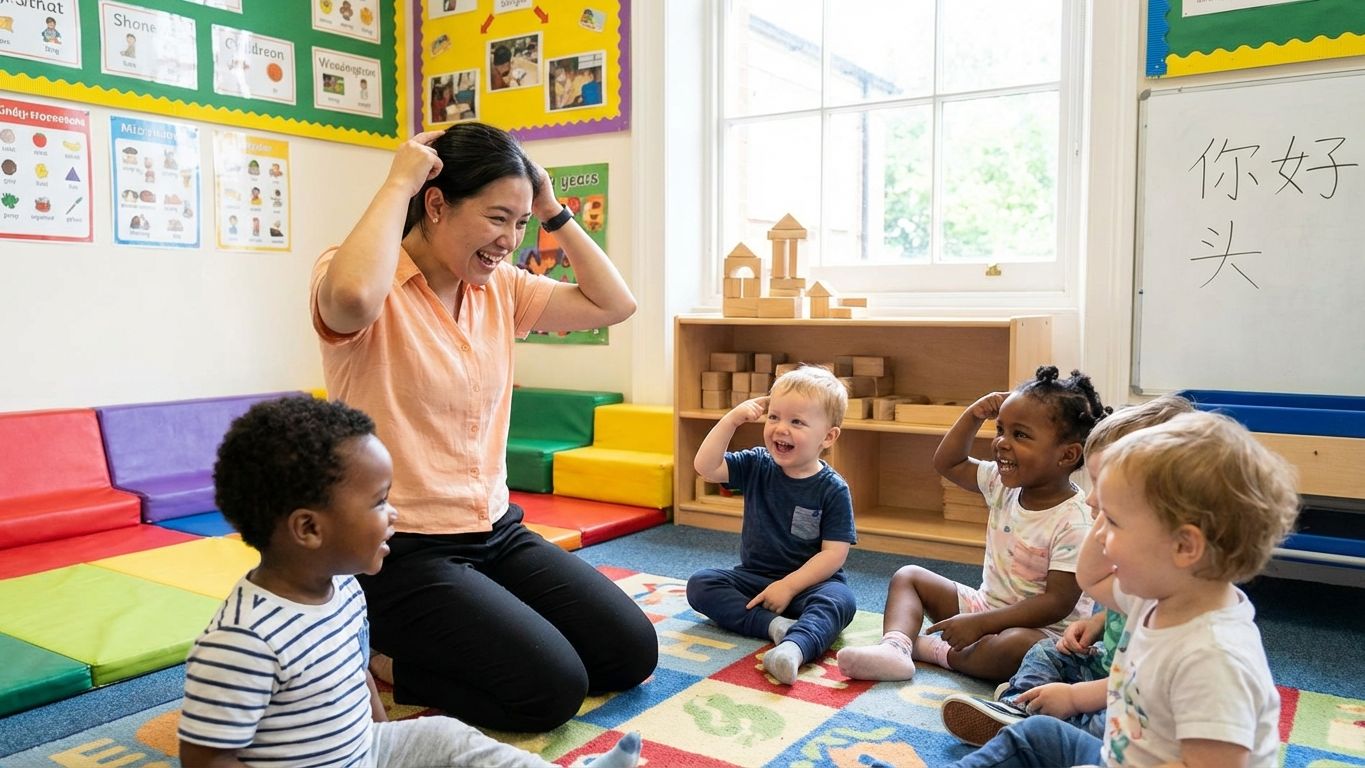
Simple Ways to Introduce Mandarin to Your Toddler Today
Mar 07, 2026Learning a new language is a wonderful adventure for young children. For toddlers and preschoolers, the best way to learn is through play, movement, and music. At this age, children are like sponges. They pick up sounds and rhythms naturally.
Introducing Mandarin Chinese does not have to be complicated. You do not need to be a fluent speaker to start. By using simple words and fun actions, you can help children develop their listening skills and boost their confidence.
Start with Daily Greetings
The easiest way to begin is by swapping a few everyday words. Using these during your morning routine or at drop-off time makes the language feel like a natural part of life.
-
Hello: Nǐ hǎo (Nee-how)
-
Thank you: Xièxie (Shyeh-shyeh)
-
Goodbye: Zàijiàn (Dzeye-jyen)
Try saying "Nǐ hǎo" when you first see your child in the morning. Pair it with a big wave and a smile. This helps them associate the sound with a friendly greeting.
The Power of "Head, Shoulders, Knees, and Toes"
Songs are a brilliant tool for language learning. They help with memory and pronunciation. You can use the familiar tune of "Head, Shoulders, Knees, and Toes" to teach body parts in Mandarin.
Try these words:
-
Head: Tóu (Toe)
-
Shoulders: Jiānbǎng (Jyen-bung)
-
Knees: Xìgài (Shee-guy)
-
Toes: Jiǎojiǎ (Jyaow-jyah)
Pointing to each part as you sing encourages "active listening." It links the physical movement to the new word, which is a core part of the Early Years Foundation Stage (EYFS) goals for physical development and communication.
Play a Colour Match Game
Toddlers love sorting objects. You can turn a simple tidying-up task or a block-building session into a Mandarin lesson. Pick one colour to focus on each day.
For example, if you are playing with red blocks, say the word Hóngsè (Hong-suh). Every time a child picks up a red toy, repeat the word. This builds vocabulary without the pressure of a formal lesson.
Why Start So Early?
Research shows that early language learning supports cognitive development. It strengthens the parts of the brain responsible for problem-solving and multitasking. In the classroom, Mandarin also promotes cultural awareness and inclusion from a young age.
"Introducing Mandarin through stories and songs has transformed our circle time. The children are more engaged, and it is wonderful to see their faces light up when they recognise a new word." — Nursery Room Leader
How We Can Help
If you would like to bring more Mandarin into your setting or home, MANDO SCHOOL offers specialist support. Our programmes are designed specifically for the Early Years and Key Stage 1.
-
Interactive Nursery Classes: Fun-filled sessions with puppets, songs, and movement.
-
Primary School Clubs: Engaging lessons that fit into the school day or after-school care.
-
Online Learning: Live, interactive classes you can join from anywhere.
Our methods focus on play-based learning that aligns with the school curriculum, making it easy for staff to integrate Mandarin into their busy routines.
Would you like to see a session in action? You can book a trial or find more free resources on our website at
Stay connected with news and updates!
Join our mailing list to receive the latest news and updates from our team.
Don't worry, your information will not be shared.
We hate SPAM. We will never sell your information, for any reason.
