
The Early Years Speech Crisis: Why Top Nurseries and Primaries Are Ditching Traditional Languages for Mandarin
Aug 07, 2026UK education is grappling with an urgent challenge: the early language gap. Recent data from the Department for Education (DfE) reveals that nearly one in three children enter Reception without the expected level of communication and language development. The Education Endowment Foundation (EEF) reports that this initial disadvantage creates a persistent attainment gap that follows children throughout primary school.
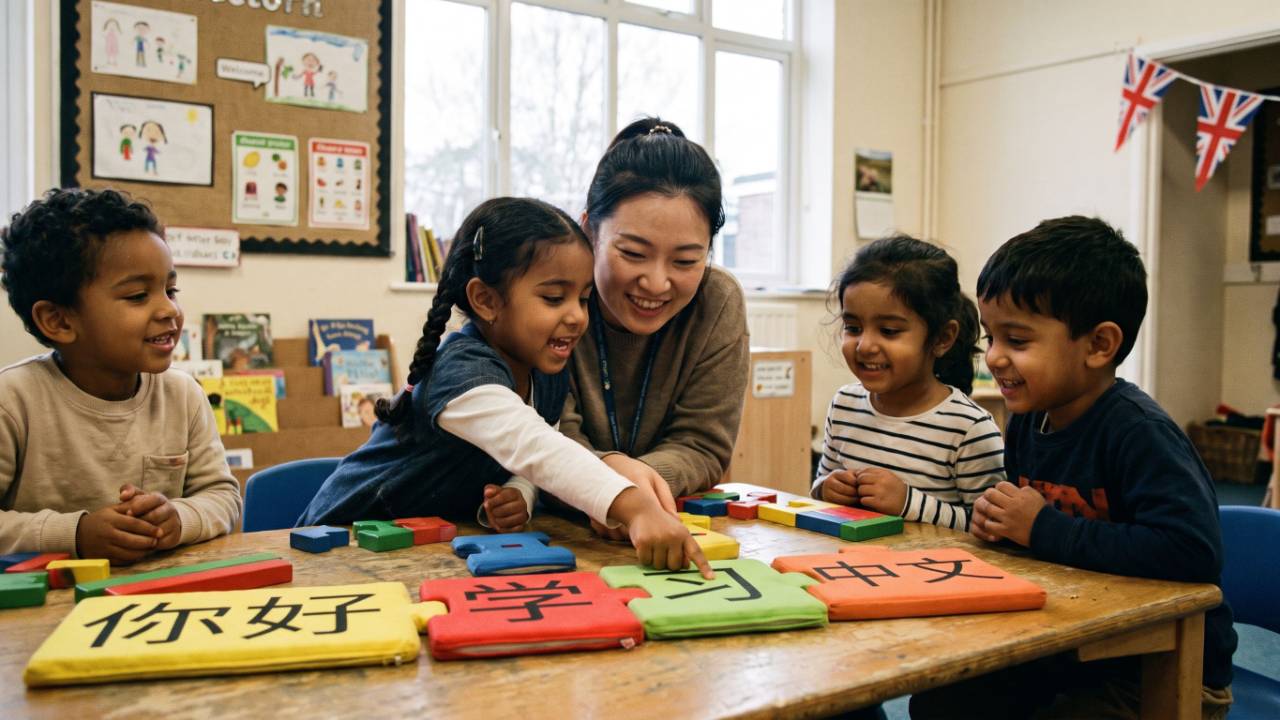
Nursery directors and primary headteachers are under intense pressure to solve this problem while managing tight operating margins. Yet a growing number of innovative institutions are turning to an unexpected solution: introducing Mandarin Chinese in the Early Years Foundation Stage (EYFS) and Key Stage 1.
Rather than overloading young learners, research demonstrates that early Mandarin training sharpens core speech pathways, boosts mathematical reasoning, and offers educational leaders a clear competitive advantage.
The Neuroscience: Why Tonal Languages Supercharge the Brain
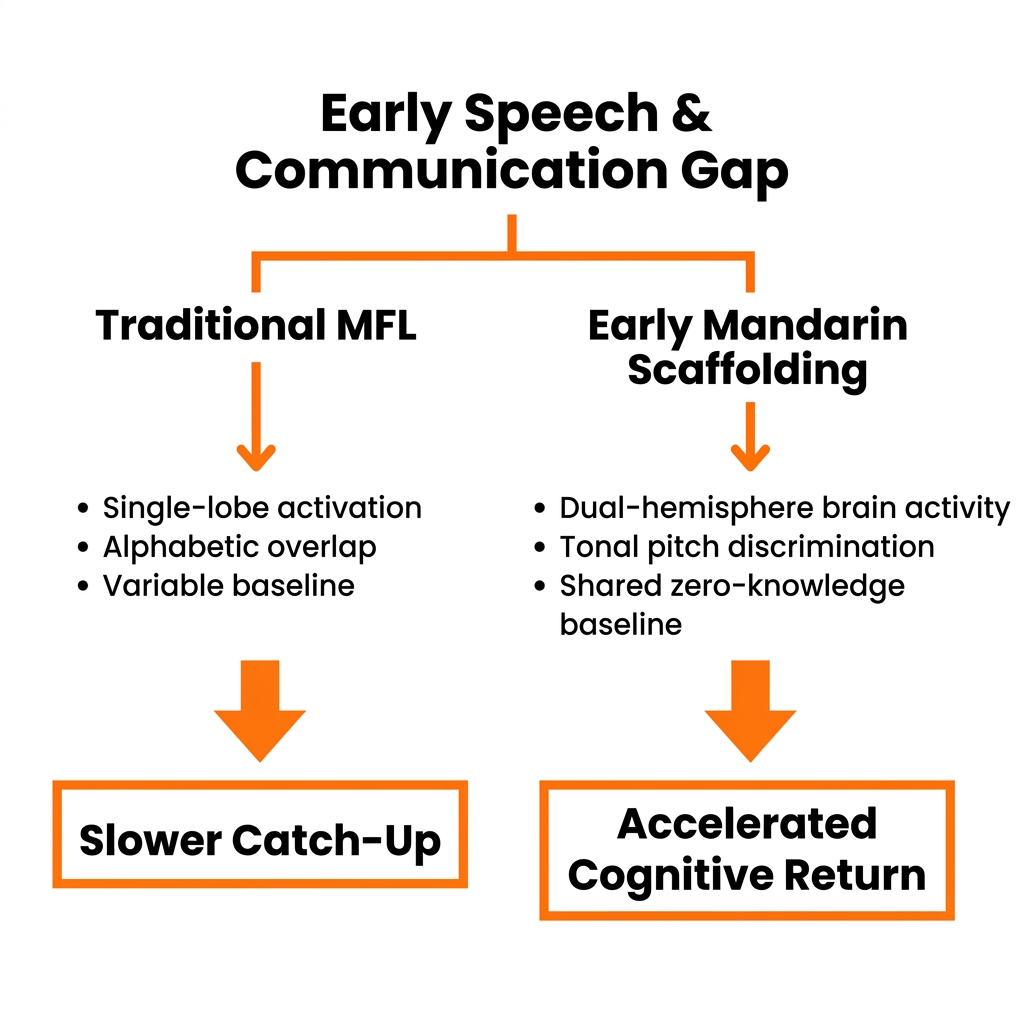
For decades, early years provision focused on Western European languages like French or Spanish. However, neuroimaging research from Peking University and University College London shows that tonal and logographic languages like Mandarin stimulate child brain development in a fundamentally different way.
-
Dual-Hemisphere Neural Wiring: Alphabetic languages primarily stimulate the left temporal lobe. Interpreting Mandarin requires both the left and right temporal lobes, as the brain must process pitch variation alongside phonetic sounds.
-
Spatial Memory and Numeracy: Writing Chinese characters relies on visual strokes arranged within precise spatial grids. Studies from the University of London show that character recognition strengthens spatial working memory, the exact cognitive apparatus used for early geometry and counting.
-
Auditory Discrimination: Mandarin uses four distinct tones. Training young ears to recognise subtle changes in pitch sharpens auditory processing, directly aiding phonological awareness and English reading readiness.
Early exposure to Mandarin acts as a high-yield cognitive intervention that supports core learning across EYFS and Key Stage 1 frameworks.
|
Learning Indicator |
Alphabetic Languages (French/Spanish) |
Tonal Logographic (Mandarin) |
Developmental Impact |
|
Brain Processing |
Predominantly left hemisphere |
Dual-hemisphere activation |
Expands neural connectivity during peak brain growth. |
|
Auditory Focus |
Phonetic rhythm |
Pitch-sensitive tonal recognition |
Sharpens listening skills and English phonics. |
|
Visual Processing |
Horizontal letter strings |
Spatial grid stroke patterns |
Builds visual-spatial memory used in mathematics. |
Equalising the Baseline for Pupil Premium Equity
A central challenge for nursery managers and headteachers is the uneven starting line among incoming cohorts. Children from word-rich homes often arrive with significant vocabulary advantages, leaving disadvantaged peers struggling to catch up.
Mandarin acts as a social equaliser. Because virtually no British child has prior exposure to Chinese characters or tonal vocabulary, every pupil enters the room on an equal footing.
Classroom trials conducted by educational researchers confirm that children who lack confidence in standard literacy often excel in Mandarin. The visual, story-led nature of character learning engages kinesthetic and visual learners who may feel disengaged by traditional text. As children master a language widely viewed as complex, their self-efficacy grows, creating positive spillover effects into behavior, social confidence, and broader classroom participation.
"Mandarin eliminates the traditional head start enjoyed by privileged pupils. Every child begins at zero, creating an inclusive environment where confidence thrives across all socio-economic groups."
(MANDO SCHOOL Curriculum Guidance)
Solving the Operational Bottleneck for Leadership
While headteachers and nursery directors recognise the value of early language learning, recruitment and cost remain major hurdles. Few early years practitioners or primary teachers possess native Mandarin fluency or the specialist methodology needed to teach young children.
This is where
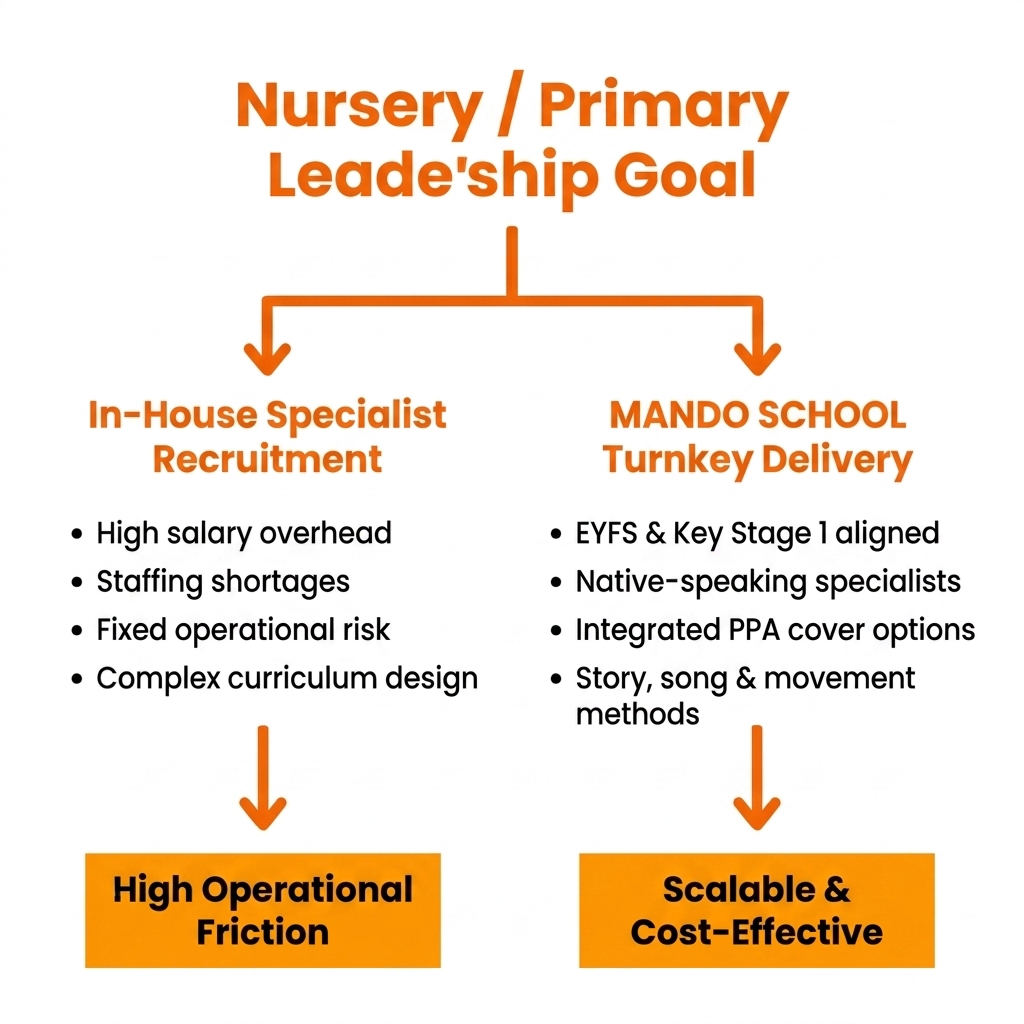
MANDO SCHOOL integrates seamlessly into school and nursery operations through tailored formats:
-
EYFS & Key Stage 1 Curricula: Ofsted-aligned learning modules delivered through interactive storytelling, music, and play.
-
Seamless PPA Cover: Primary schools utilize specialist Mandarin teachers to fulfill Planning, Preparation, and Assessment (PPA) time for core teaching staff.
-
Nursery Enrichment Sessions: Turnkey morning or afternoon modules designed to enhance early years communication metrics.
-
Extracurricular Clubs: Breakfast and after-school clubs that generate parent satisfaction without adding administrative overhead.
Standing Out in a Competitive Market
The early years and primary sectors operate in an increasingly competitive environment. Parents are actively seeking settings that offer forward-thinking, high-value educational opportunities.
Introducing Mandarin signals progressive leadership focused on preparing children for a global future. School governors, prospective parents, and inspection bodies view early Mandarin provision as clear evidence of an ambitious, high-performing curriculum.
Delivering High Return on Education
Addressing the early speech and language gap requires smart, evidence-based strategy. By introducing Mandarin through specialist providers like MANDO SCHOOL, nursery directors and headteachers can drive cognitive development, close attainment gaps, and strengthen institutional standing.
To discover how MANDO SCHOOL can deliver tailored language sessions, PPA cover, or enrichment clubs for your setting, visit
Stay connected with news and updates!
Join our mailing list to receive the latest news and updates from our team.
Don't worry, your information will not be shared.
We hate SPAM. We will never sell your information, for any reason.
