

Why Primary Schools Ditching French for Mandarin Are Outperforming the Rest
Jul 25, 2026Primary school leadership requires balancing tight budgets, Ofsted inspection frameworks, and the challenge of preparing young pupils for an uncertain global economy. Amid these pressures, a quiet shift is occurring across British state and independent primaries. Forward-thinking headteachers are moving away from traditional Modern Foreign Languages (MFL) like French or German. Instead, they are introducing Mandarin Chinese.
The rationale behind this move extends far beyond cultural enrichment. Research in neuroscience, educational economics, and child psychology shows that teaching Mandarin to young children boosts brain development, levels the playing field for disadvantaged pupils, and enhances a school’s competitive standing.
Here is why primary school leaders are making the switch.
The Cognitive Advantage: A Full Brain Workout
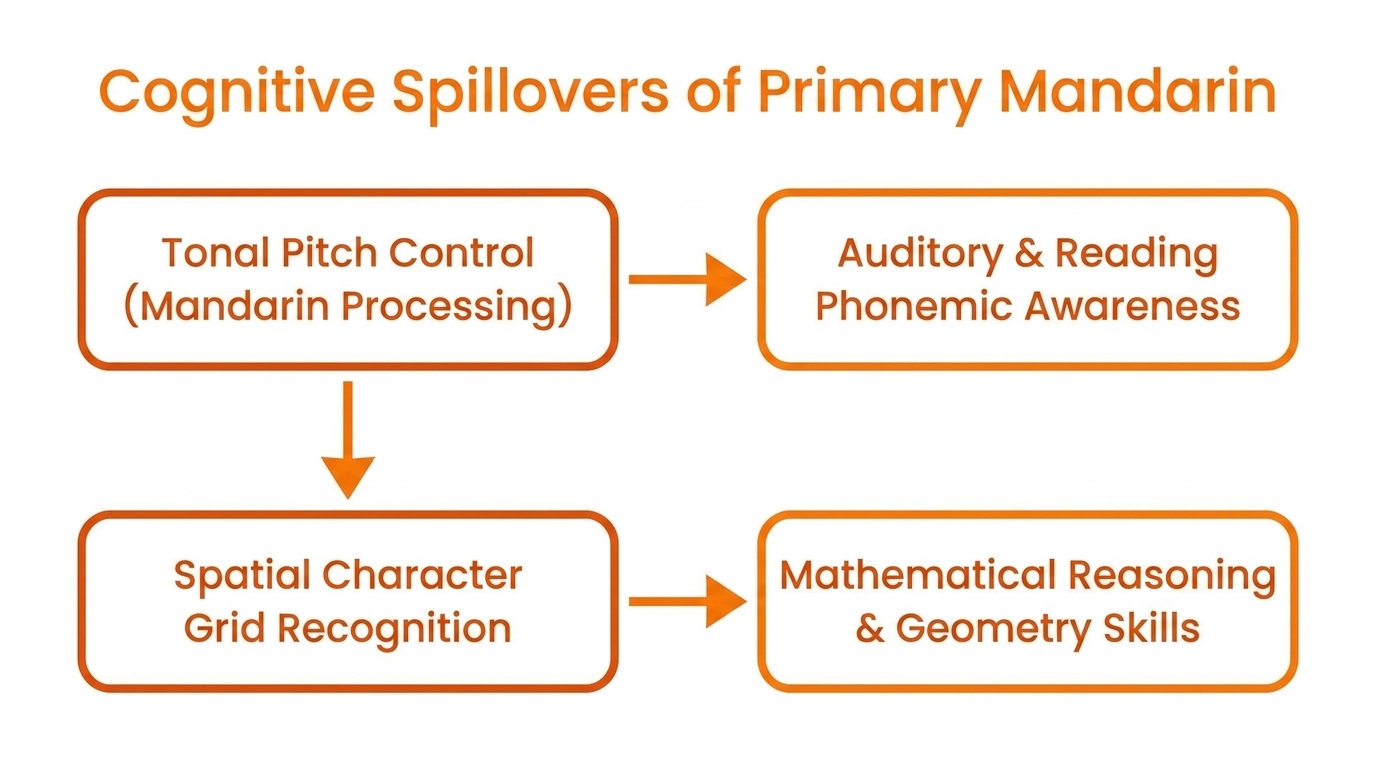
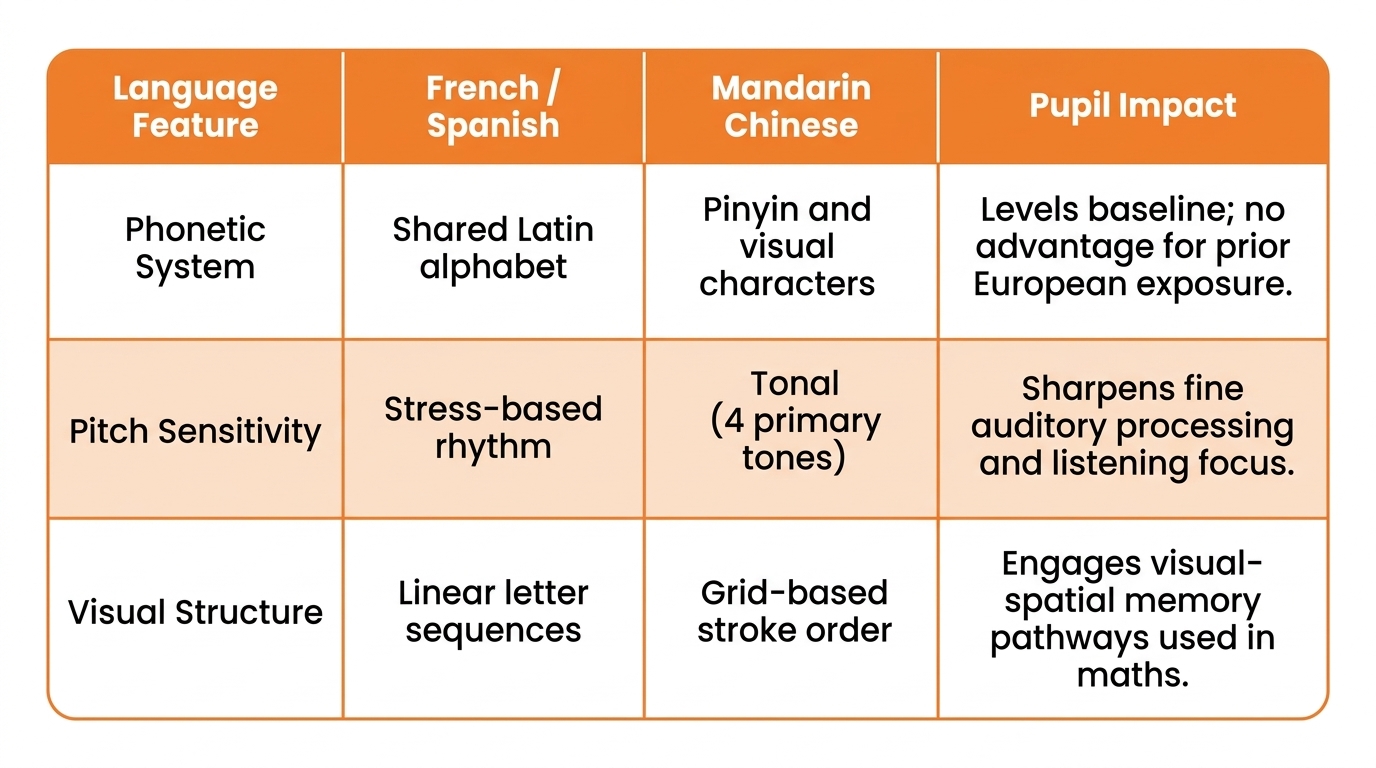
For decades, primary MFL provision in the UK has relied on Western European languages. However, research in cognitive neuroscience indicates that tonal and logographic languages like Mandarin engage human brain structures differently than phonetic languages like French or Spanish.
-
Dual-Hemisphere Activation: Brain imaging studies from Peking University demonstrate that native English speakers rely predominantly on the left temporal lobe to interpret speech. In contrast, interpreting Mandarin requires both the left and right temporal lobes, as the brain must process pitch variation alongside phonetic sound.
-
Mathematical Processing and Spatial Awareness: Mandarin characters are built from visual strokes arranged in spatial grids. Research from the University of London shows that learning to read and write Chinese characters strengthens spatial working memory and visual pattern recognition. These same neurological pathways are heavily drawn upon when learning early geometry and arithmetic.
-
Phonemic Awareness: Tonal differentiation sharpens auditory processing in young children. Early childhood studies show that pupils trained in pitch-sensitive languages demonstrate superior listening comprehension and phonological awareness in English reading tasks.
Introducing Mandarin at Key Stage 1 or 2 acts as a high-yield cognitive intervention that supports core learning across the wider curriculum.
Leveling the Playing Field for Pupil Premium Equity
A common challenge in primary MFL is uneven baseline performance. Pupils from higher socio-economic backgrounds often enter Key Stage 2 with prior exposure to European languages through family travel or private tutoring. This gap can leave disadvantaged pupils disengaged.
Mandarin offers an equal starting point. Because it shares no linguistic roots with English or Romance languages, virtually every child enters the classroom with zero prior knowledge.
"Mandarin offers a fresh start for every child. Unlike French or Spanish, it is completely new for everyone, creating a level playing field and boosting confidence across the board."
— MANDO SCHOOL Educational Framework Guidance
Classroom observations show that pupils who struggle with traditional reading and writing often excel in Mandarin. The logographic structure allows visual learners to succeed, while the oral, music-led approach used for younger cohorts engages kinetic and auditory learners.
When previously disengaged pupils master a language widely regarded as complex, their self-efficacy grows. This confidence frequently transfers to other areas of their education.
Solving the Operational Challenge: Specialist PPA and MFL Delivery
Headteachers often cite staffing costs and a lack of qualified teachers as key barriers to offering Mandarin. Primary school teachers rarely possess the native fluency or specialist training required to deliver engaging Mandarin lessons.
This is where external providers like
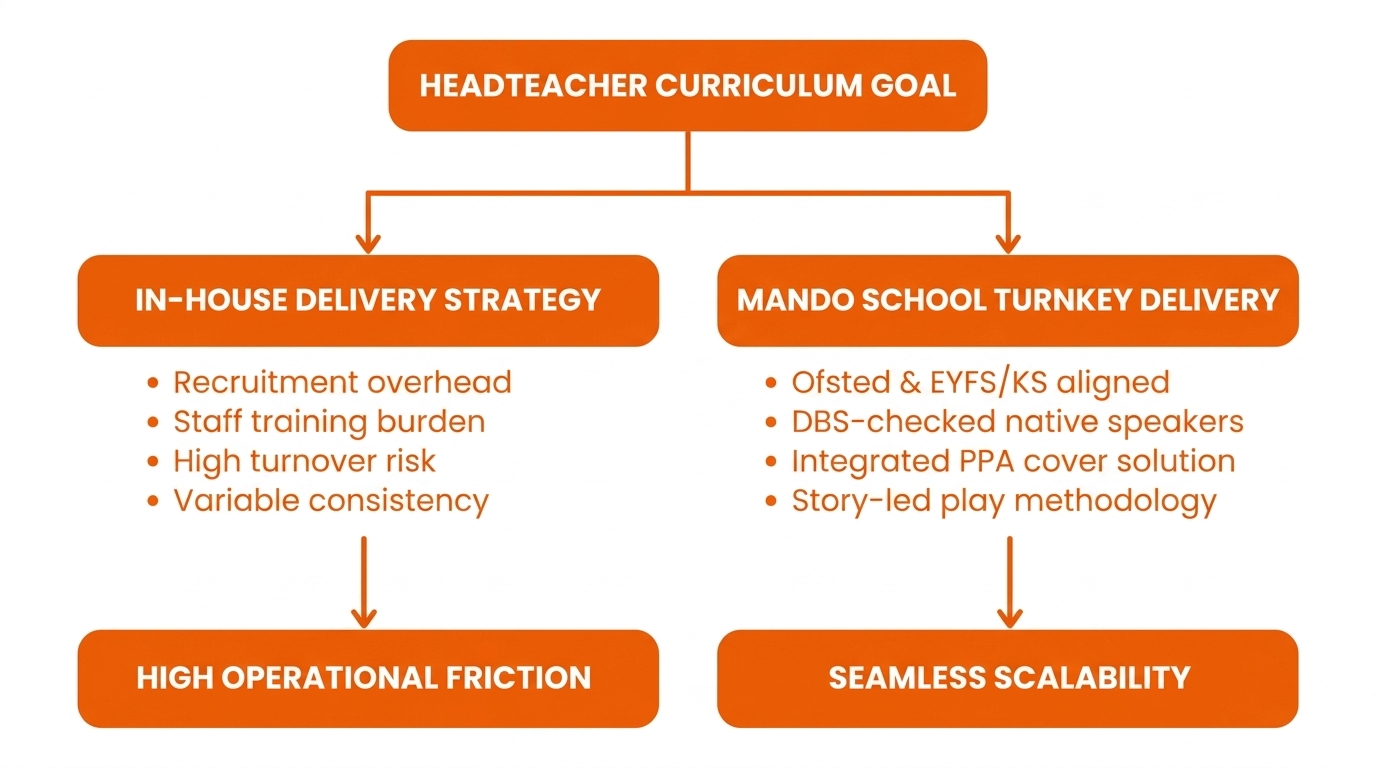
MANDO SCHOOL integrates directly into primary operations through tailored formats:
-
Ofsted-Aligned MFL Curriculum: Structured progression frameworks tailored for Early Years, Key Stage 1, and Key Stage 2.
-
High-Quality PPA Cover: Specialist teachers deliver interactive sessions, giving core teaching staff guaranteed planning and preparation time.
-
Extracurricular and After-School Clubs: Parent-funded or school-subsidised enrichment options that run without administrative overhead.
-
Interactive Methodology: Lessons use story-led adventures, movement, songs, and games to keep pupils engaged while building retention.
The Competitive Edge in School Choice
Primary education operates in a competitive environment. Parents are increasingly discerning, looking for schools that offer innovative opportunities alongside strong academic standards.
Introducing Mandarin signals forward-thinking leadership. It demonstrates a commitment to future-proofing pupils for a global economy where China remains a major economic influence.
Delivering High Return on Education
Upgrading your primary school MFL offering is an investment in cognitive development, educational equity, and institutional reputation. By partnering with specialist providers like MANDO SCHOOL, headteachers can implement a high-impact Mandarin curriculum easily and cost-effectively.
To explore how MANDO SCHOOL can provide MFL teaching, PPA cover, or after-school clubs for your primary school, visit
Related reading
Want to see this in practice? Read how our primary school programmes work, take a look at our free KS2 sample scheme of work, or see our page for Mandarin for schools and nurseries in London. You may also like how primary schools can find time for languages.
Stay connected with news and updates!
Join our mailing list to receive the latest news and updates from our team.
Don't worry, your information will not be shared.
We hate SPAM. We will never sell your information, for any reason.
