We have classes for
KS1 (5-7 yrs)
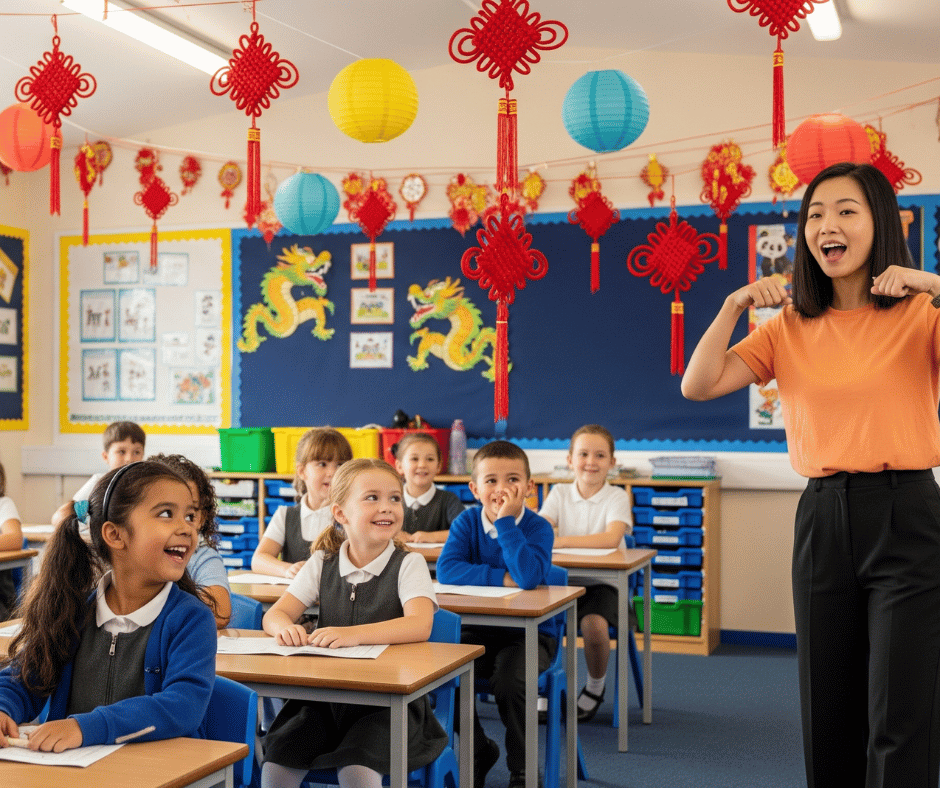
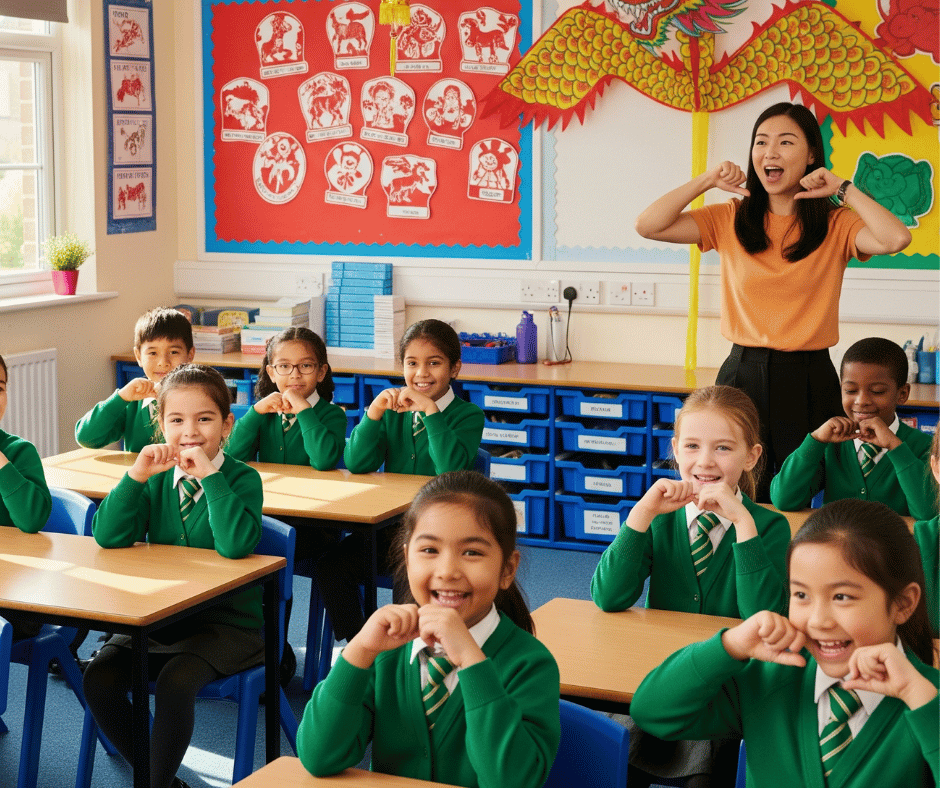
Learning Mandarin in a UK primary school is a fun adventure, starting with the youngest students in Key Stage 1 (ages 5-7). For these little ones, the focus is all about play! They learn new words and phrases through story-led adventures, where a teacher might tell a tale about a dragon and a pearl, acting out the parts together. Movement and action songs are a big part of the fun, helping them remember body parts or animals through songs like a Chinese version of "Head, Shoulders, Knees, and Toes." Simple worksheets with colouring and matching games help reinforce what they've learned in a colourful, engaging way.

KS2 (8-12 yrs)
As they move into Key Stage 2 (ages 7-11), the learning becomes a bit more structured, but still super creative. They begin to read and write with Pinyin, which helps them sound out words, and they start to learn simple Chinese characters. Songs and games continue to be a fantastic way to practice, but they might be more complex, like role-playing a shopping trip to practice asking for different items. This is also when they start to learn about Chinese culture, exploring everything from the traditions of the Spring Festival to the stories of the Zodiac animals, making the language feel even more real and exciting.
Flexible Solutions
PPA Cover
PPA Cover can be delivered effectively by specialist Mandarin teachers, freeing up class teachers for planning, preparation, and assessment.

MFL Curriculum
Mandarin can be easily integrated into the MFL curriculum to meet national requirements while offering a unique and culturally rich language option.

Enrichment Clubs
Offering Mandarin as an after-school or lunch-time enrichment club provides pupils with a fun and engaging way to explore a new language and culture.
What Nurseries, Schools & Parents Say
I finally discovered Mandarin classes suitable for my boys. As non-native speakers we did not want to enrol our kids on to a Chinese School as I feel this would be too advanced for them. I soon learned my kids School was offering Mandarin Chinese with Mando School as part of the curriculum and I was over the moon! To date the Children have learned the basics including introduction, colours, family, numbers and they are expected to learn animals, shapes, food and drinks this term. I cannot wait and look forward to what they have learned when they come back from School!
Julie Luong
The children really enjoy Mandarin club with MANDO school. The teacher is great with the pupils and ensures they are really engaged. It's great that we have been able to introduce children to learning a third language at the school in addition to French and Spanish. MANDO are also great to deal with and always quick to respond.
Tockington Manor School
Children in my Year 5 class really love their Mandarin classes with MANDO SCHOOL. The programme is well adapted for the age group and the content is next to none. Children learn how to read, write, speak and listen in Mandarin Chinese. I can see why our Headteacher signed up with MANDO SCHOOL as it ticks the national curriculum boxes and delivers more than they promise. I would highly recommend MANDO SCHOOL!
Mike Brown
Why Mandarin for Primary School Children?
Future-Proofing Our Kids
Cultural Super-Spies
Brain Gym Workouts
Inclusivity Wins
Happy Staff, Happy School
Easy-Peasy Integration
Parental Wow Factor
Character Building, Simplified
Global Citizens in the Making
Why Schools choose us
Ofsted-aligned, EYFS/KS framework ready
Reliable, qualified teachers
Track record with UK schools
Fun and Educational Curriculum for Primary Schools
Vocabulary is introduced through themes relevant to primary school children, such as:
- Greetings and Introductions: 你好 (Nǐ hǎo - Hello), 我叫… (Wǒ jiào… - My name is…)
- Numbers and Colours: Counting in Mandarin and naming colors.
- School Life Vocabulary: Classroom objects, days of the week, and simple commands.
- Daily Conversations: Asking questions, answering simply, and polite phrases.
- Conversational Practice:
- Each lesson introduces new vocabulary with two simple conversational sentences using 2-3 new words.
- Encourages children to use Mandarin in practical scenarios (e.g., greetings, asking names, describing colors).
- Repetition and Reinforcement:
- Key vocabulary is repeated throughout the lesson to reinforce memory.
- Words from previous lessons are revisited for cumulative learning.
Learn more about the curriculum

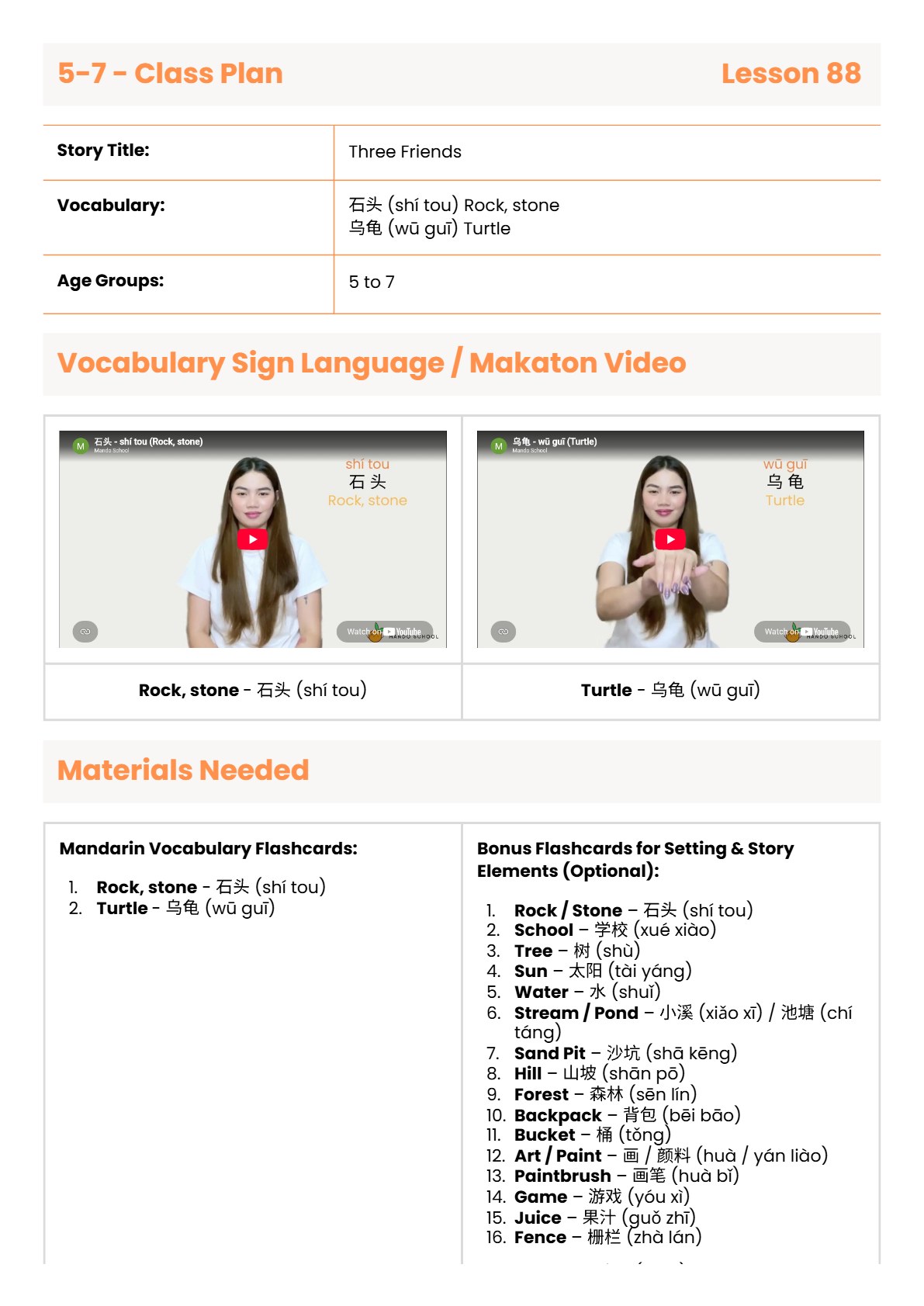
A look inside one of our KS1 class plans
Every lesson comes with a clear plan, so teachers and staff always know what happens next.
- A story-led lesson with clear aims
- Vocabulary videos and sign language
- Speaking, listening and games
- Materials listed in advance